
Community
Catherine “Cathy” M. Keyser
By Aisha Lewis
Advertisement · Why this ad?
Michelle, an Ohio State University graduate, has spent over six years focusing on community issues in Cleveland, including social justice and local initiatives. She has previously written for NPR's local affiliates, where she honed her storytelling skills to highlight diverse community voices.
More from Michelle →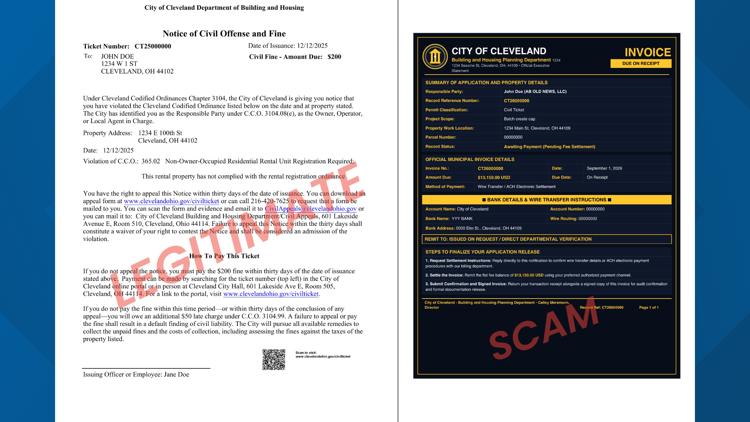
As the sun began to rise over Cleveland, a sense of urgency rippled through the community. Residents, eager to start new projects and ventures, were met with an alarming warning from city officials. A wire transfer scam targeting permit seekers has surfaced, with fraudsters exploiting easily accessible contact information to deceive unsuspecting citizens. The city’s permit portal, meant to facilitate growth and development, has inadvertently become a tool for scammers.
In a recent announcement, the city of Cleveland alerted its residents to a concerning trend involving wire transfer scams. Fraudsters have been utilizing the city’s permit portal, which lists phone numbers and email addresses for those applying for permits. This accessibility has made it alarmingly easy for scammers to reach out to hopeful permit seekers, posing as city officials and requesting funds for various permits or services.
According to city officials, the scam has been particularly prevalent among individuals seeking building permits, business licenses, and similar documents. The perpetrators often provide convincing details, including legitimate permit information, to lend credibility to their schemes. This has left many residents feeling vulnerable and unsure about how to protect themselves against such deceitful tactics.
The community's response has been one of shock and concern. Local residents are rallying together, sharing their experiences and advice on social media platforms to ensure that no one else falls victim to these scams. Many have expressed frustration over the ease with which scammers can exploit public information.
“It’s disheartening to think that while we’re trying to improve our community, there are people out there trying to take advantage of us,” said Maria Lopez, a local business owner who recently encountered a scam attempt. “We need to look out for each other and stay informed.”
Maria's experience is not isolated. Many residents have taken to local forums and neighborhood groups to share their stories. One resident, Thomas Reed, recounted how he almost fell for the scam while applying for a business license to open a coffee shop in the Tremont neighborhood. “They had all my information. It was terrifying,” he said, emphasizing the need for greater awareness. “I just want to start my business without worrying about being scammed.”
Community leaders are also voicing their concerns. Councilwoman Phyllis Cleveland stated, “Our residents deserve to feel safe when they are trying to invest in their futures. We must come together as a community to combat these scams.”
In response to the growing concern, the city has ramped up its efforts to inform residents about how to recognize and report such scams. Officials are encouraging everyone to verify any requests for payment by directly contacting the city’s permit office through official channels, rather than responding to unsolicited messages.
“We understand that this is a challenging situation for our residents,” said Cleveland’s Director of Permits and Inspections, John Miller. “Our goal is to keep our community informed and safe. We urge everyone to be vigilant and to report any suspicious activity immediately.”
To combat this issue effectively, the city has provided several resources for residents to educate themselves about potential scams. The official city website now features a dedicated section that outlines common fraud tactics, alongside contact information for reporting suspicious activities. Additionally, local nonprofits and community organizations are stepping up to host informational sessions, equipping residents with the tools they need to protect themselves.
“Knowledge is power,” said community advocate Sarah Thompson. “By working together and sharing information, we can help each other avoid falling prey to these scams.”
Local organizations, such as the Cleveland Community Development Corporation, are hosting workshops aimed at educating residents about identifying scams. These sessions are not only informative but also serve as a platform for residents to voice their concerns and share experiences. “We want to create a safe space where people can learn and feel supported,” said workshop coordinator Lisa Grant. “It’s about building a resilient community.”
Churches and community centers are also stepping in to provide support. For example, the Hope Community Church is organizing a series of town hall meetings where residents can come together to discuss safety and strategies for avoiding scams. Pastor James Carter emphasized the importance of community solidarity in these trying times. “It’s heartwarming to see how people are stepping up to help each other,” he said. “We’re all in this together, and it’s our responsibility to look out for one another.”
Looking ahead, the city plans to enhance the security of its permit portal to prevent further exploitation by scammers. Officials are collaborating with cybersecurity experts to implement additional safeguards that will protect residents’ information and reduce the likelihood of fraudulent activity.
As Cleveland continues to grow and evolve, the resilience of its community is evident. Residents are determined to protect their dreams and ambitions, ensuring that the American dream remains alive and well in their city. Together, they are navigating this challenge with grace and solidarity, proving that even in the face of adversity, the strength of community can prevail.
In addition to immediate measures, city officials are exploring long-term solutions to the issue of public information security. This includes potential legislative changes to better protect personal information in public databases. “We are committed to finding ways to make our systems more secure,” said Councilwoman Cleveland. “This is about protecting our residents and ensuring that they can pursue their goals without fear.”
Furthermore, the city is considering partnerships with local tech companies to develop more robust verification systems for permit applications. These innovations could include two-factor authentication and enhanced encryption methods, ensuring that only legitimate requests are processed.
In conclusion, while the emergence of wire transfer scams targeting permit seekers is a serious concern, the proactive response from both city officials and community members reflects a commitment to safety and support. By staying informed and vigilant, Cleveland residents can continue to pursue their goals while safeguarding their hard-earned resources. This collective effort not only strengthens community ties but also fosters a culture of resilience that will benefit Cleveland for years to come.
By Aisha Lewis

By Aisha Lewis

By Michelle Rivera

By Michelle Rivera